Ukrainian NMT English exam preparation: a teacher's plan
Preparing a student for the NMT in English is a different job from teaching English in general. The student already has the language, or a good part of it. The task is to turn it into reliable results under time pressure, in a specific test format. This guide is a plan you can use with one student or a small group. The exact format of the NMT is set each year. Before you plan anything, read the current program and specification on testportal.gov.ua, including the types of tasks and how the time works, then build your plan around it.
Start with a diagnostic, not a textbook
In the first week, give one full mock section under timed conditions, then sit down with the result. You are looking for three things:
- Reading: does the student lose points because of unknown words, or because of how they read (too slowly, too carefully, not checking the question first)?
- Use of English (grammar and vocabulary in context): which grammar areas keep appearing in the mistakes: tenses, articles, prepositions, word formation, conditionals?
- Time: does the student finish? Which part eats the time?
The test is mostly about reading and using English accurately, so it makes sense to organize the preparation around these two areas, plus the vocabulary that supports both.
Build a study plan backward from the exam date
Count the weeks to the exam and divide them into phases:
- Foundation: close the biggest grammar gaps and start a vocabulary routine. Short timed sections, once a week.
- Training: work on each task type separately, then in mixed sets. Timed practice becomes the norm.
- Simulation: full mock tests under real conditions (quiet room, the same time limit, no phone), followed by a careful review.
- Final weeks: lighter load, focus on the recurring mistakes, sleep and routine.
20–40 minutes of focused work on most days works better than one four-hour session on Sunday. Frequency matters more than length, because memory builds through repetition spread over days.
Vocabulary that actually shows up
Exam vocabulary is not a list to memorize in the last month. Build it from what the student meets in reading practice. Three habits help:
- Save words from mistakes and from texts, not from a random list. Words a student has seen in a real context stay better.
- Review with spaced repetition. Retrieval and spacing are among the most effective memory methods: test the student on a word, then test again after a gap that grows.
- Learn chunks, not single words: “make a decision”, “be in charge of”, “as a result of”. They also help in use of English tasks, where the choice of a word is often decided by what surrounds it.
In verbios, words a student saves are practiced with spaced reviews: flashcards, matching, multiple choice, letter order and typing, with a status for each word (Learning, Learned, Mastered or Trouble). Ten minutes on a phone is enough. See word practice. For more on this subject, read how to teach vocabulary so it sticks.
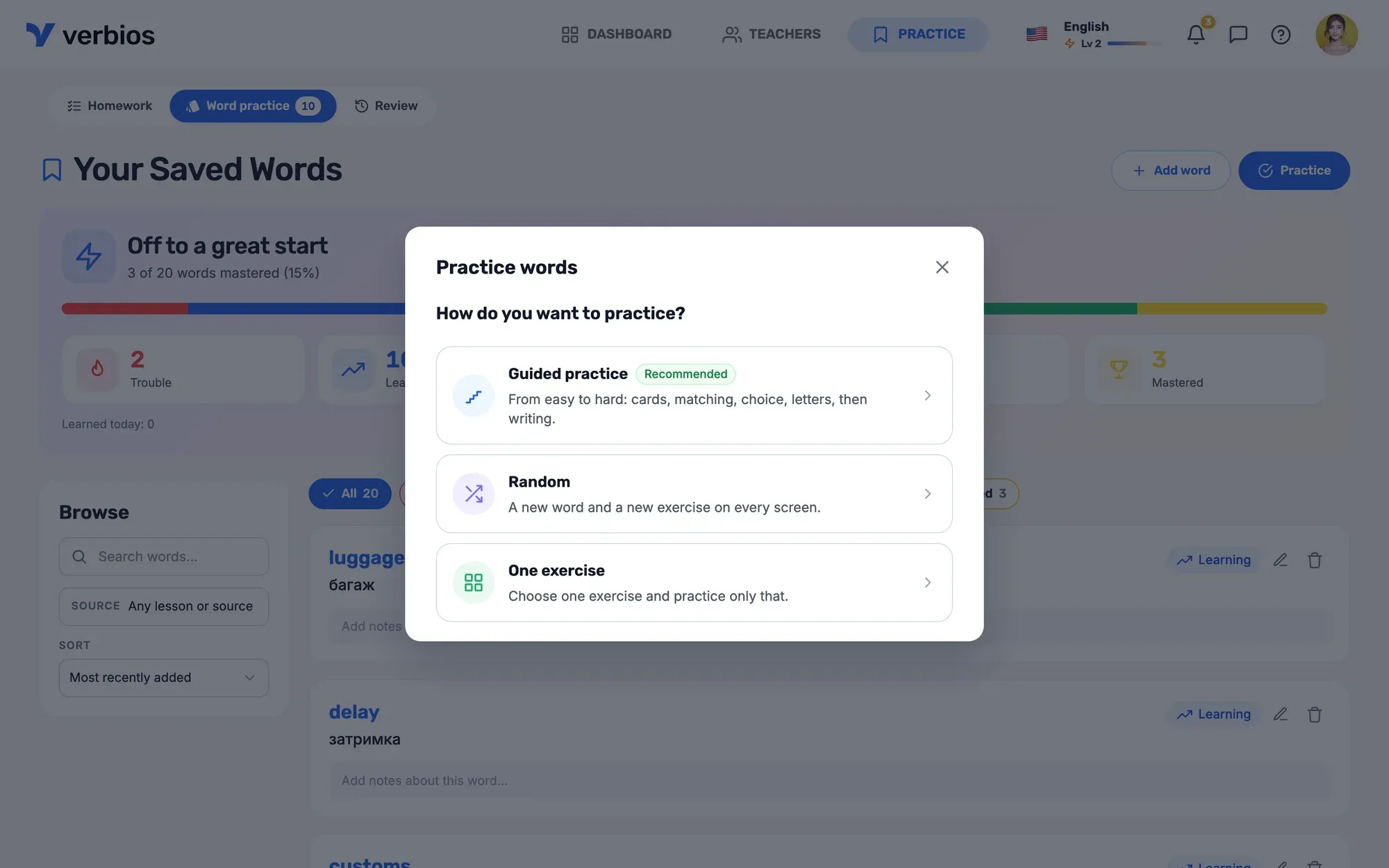 Students choose how to practice their saved words.
Reading strategies you can teach in one lesson
Many students lose time because they read the text first, in full, and then look at the questions. Teach a different order:
- Skim the questions first, so you know what to look for.
- Read the text once at normal speed, underlining names, numbers and linking words (however, although, instead).
- Answer what you can, and mark what you cannot. Do not spend three minutes on one question.
- Check against the text. The right answer is supported by the text, not by what the student thinks is true.
- Eliminate. In multiple-choice tasks, remove two obviously wrong options first. Guessing a remaining answer is better than leaving a blank.
Practice each step on short texts, with a timer. Then increase the length.
Use of English: make the mistakes visible
Keep a personal mistake log with the wrong sentence, the correction and the rule in the student’s own words. Review the log before every mock test. Students tend to repeat the same five errors, and seeing them in writing helps more than another explanation. For a gap-fill, teach students to read the whole sentence, decide what part of speech is missing, and only then look at the options.
Mock tests, timing and review
A mock test is practice for the exam conditions as much as for the language. Do it seriously:
- Set a timer for the real limit, with no pauses.
- Mark answers the student guessed. Guesses that were right are still weaknesses.
- Spend at least as long on the review as on the test itself. For every mistake, ask: was it vocabulary, grammar, careless reading, or time?
Between mock tests, a few short timed sets per week are enough.
Homework that does not take your evenings
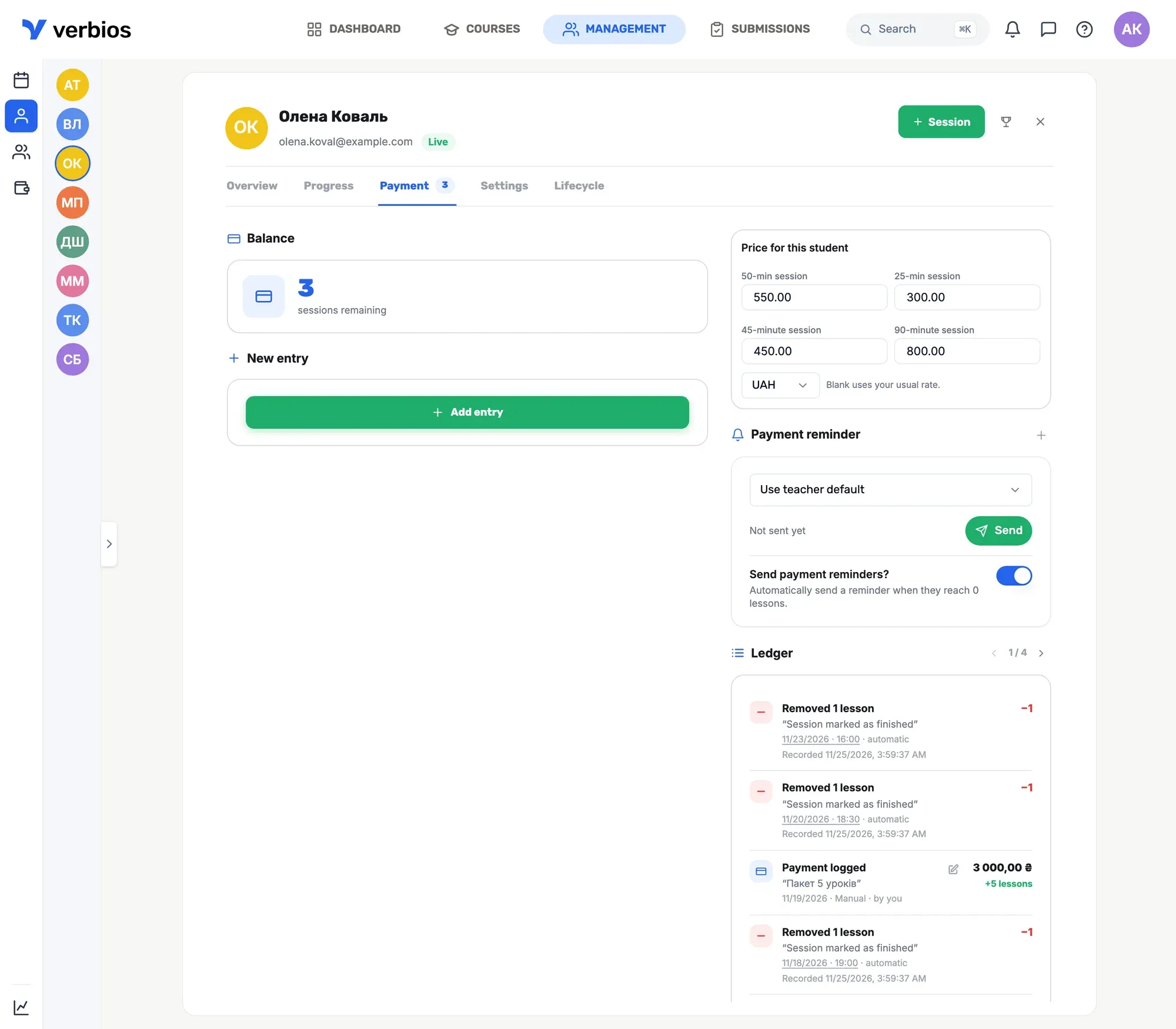
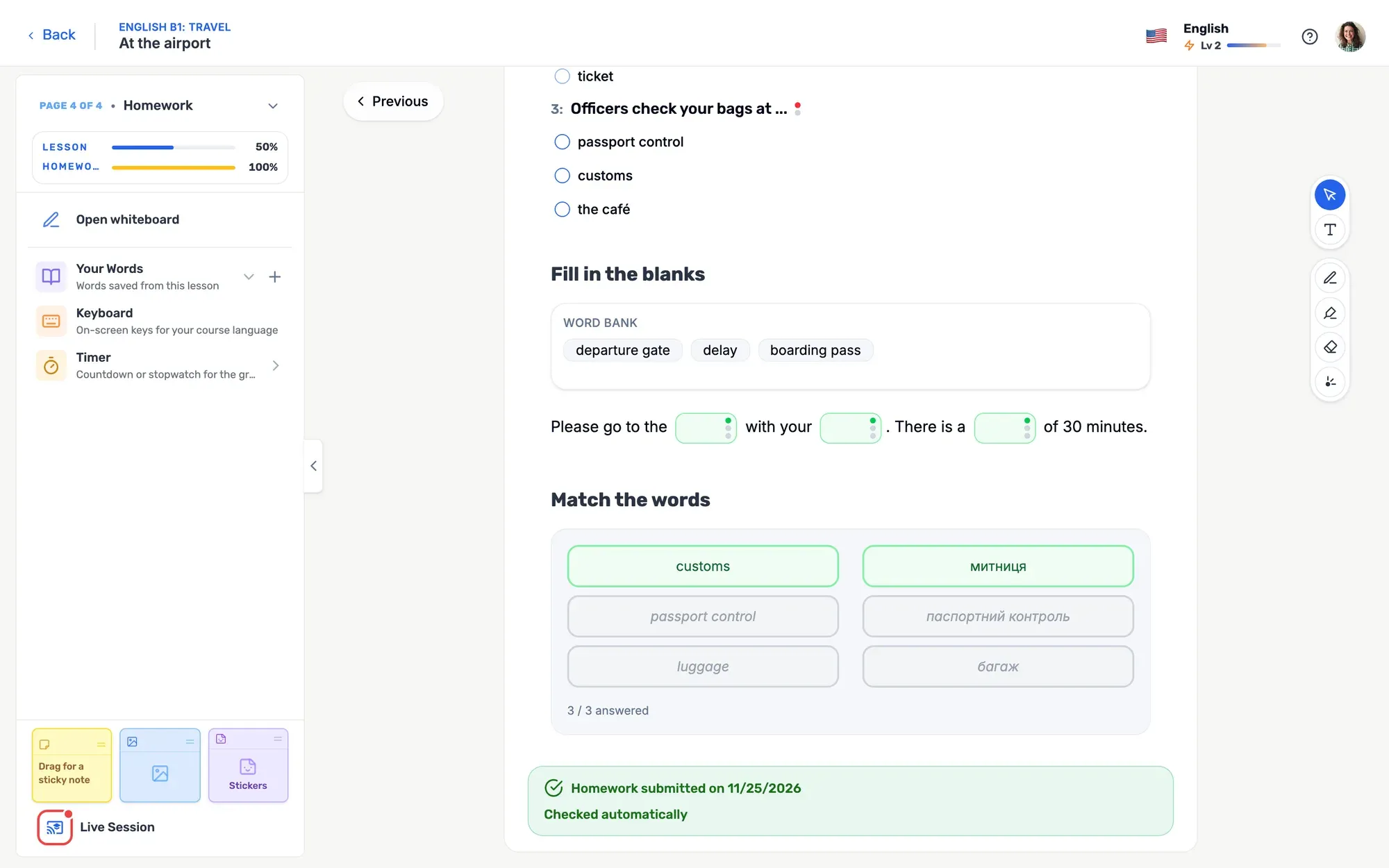
Test preparation generates a lot of homework, and marking exercises with one correct answer by hand is a poor use of your time. In verbios, homework made of exercises with correct answers (quizzes, fill in the blanks, matching) is checked automatically when the student hands it in, and the student sees the result right away. Essays and exercises without marked answers wait for you. That gives the student instant feedback and leaves your time for the things only a teacher can do. See homework that is checked automatically.
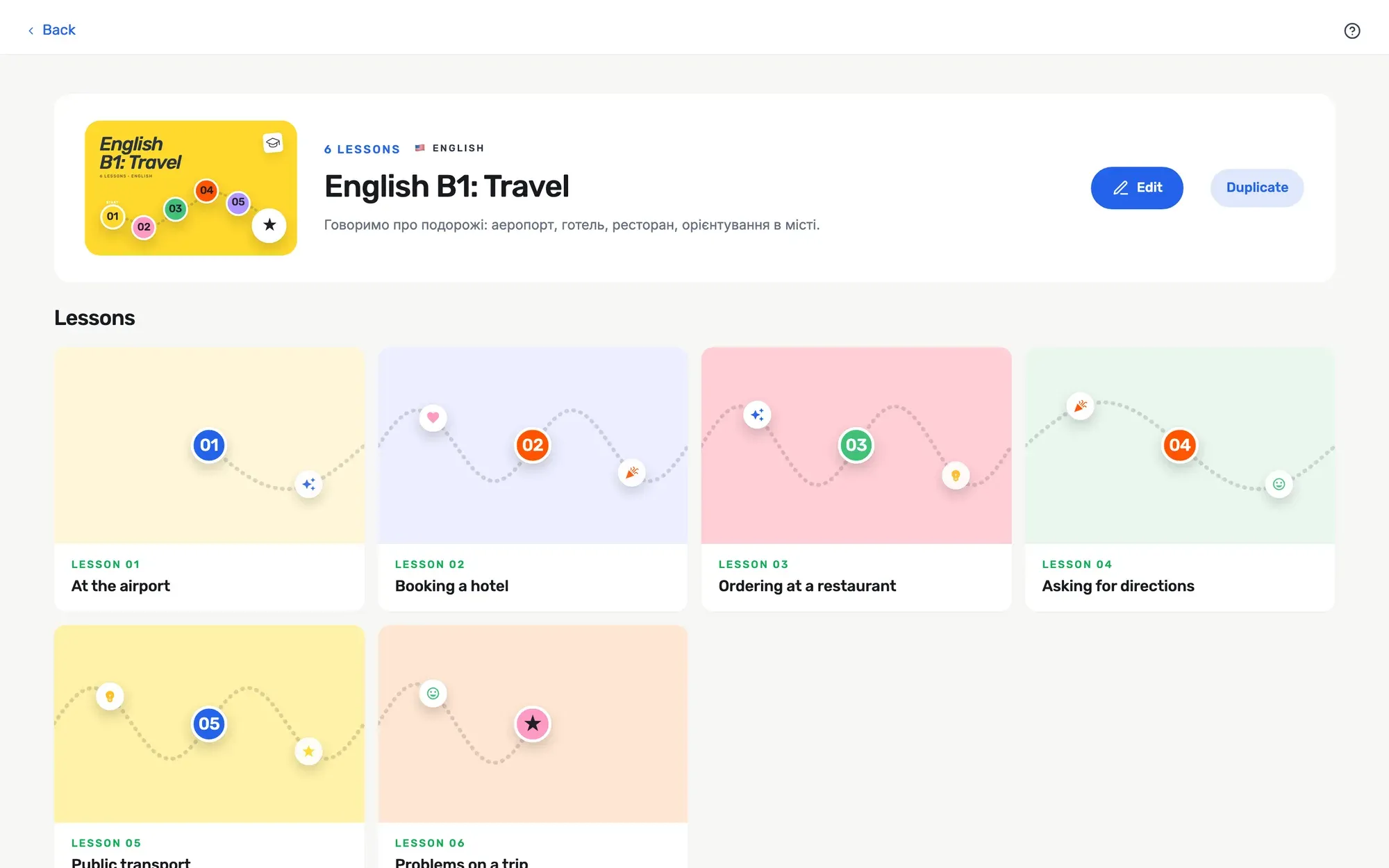
If you work with a group preparing for the same exam, course marathons let you release lessons on a schedule, which suits a countdown plan.
Motivation for 16 and 17-year-olds
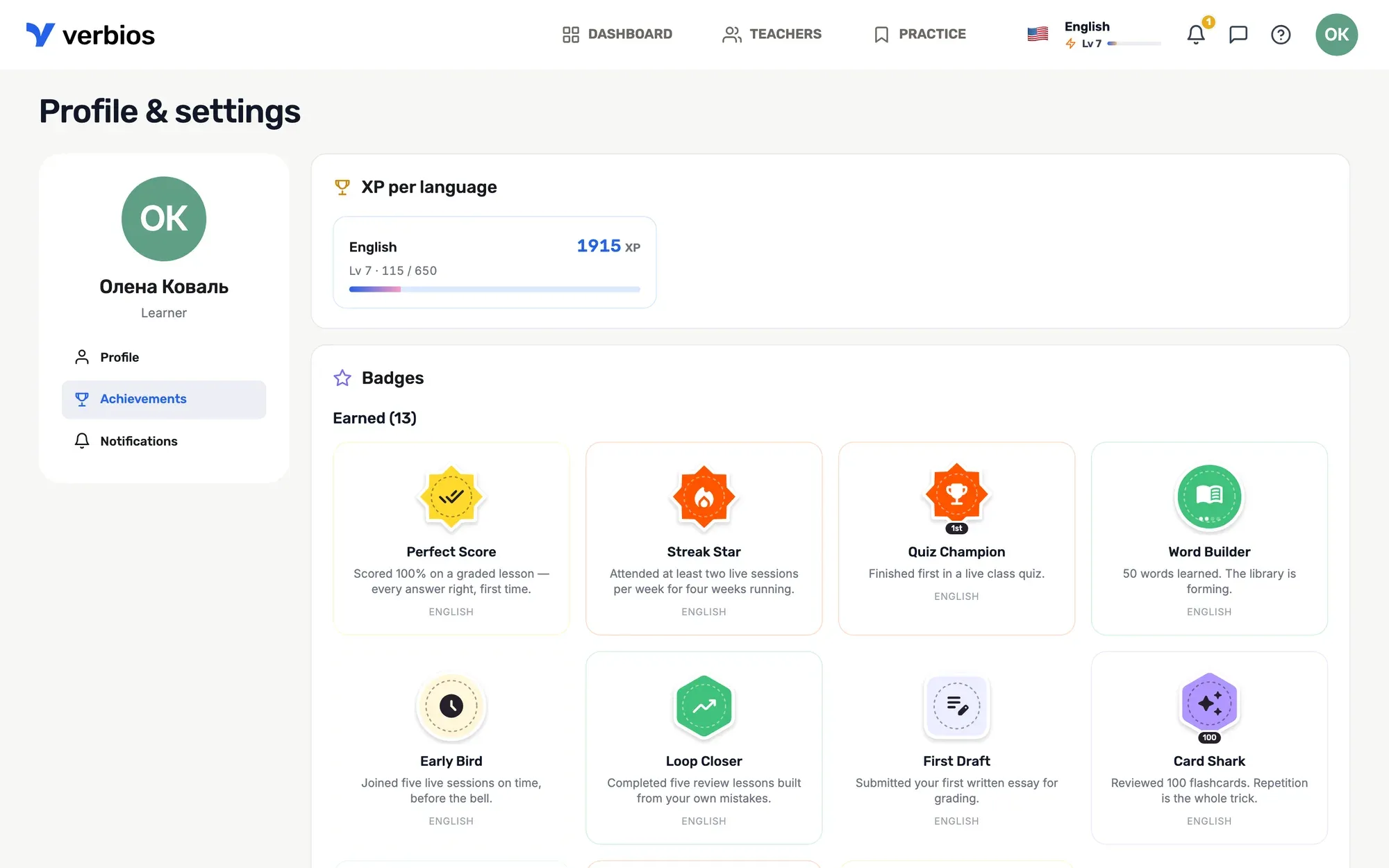
- Make progress visible. A chart of mock test results or the number of mastered words works better than “keep going”.
- Set small targets: “this week, reading in 20 minutes”.
- Talk about mistakes calmly. A bad mock test in October is information, not a verdict.
- Involve the parents without pressure. A short update on what was practiced and what is next.
- Plan rest. Overloaded students stop learning efficiently.
If you want everything in one place (a course with timed exercises, saved words and homework), check the verbios plans.
Frequently asked questions
Where can I find the current NMT English format?
On the official site of the Ukrainian Center for Educational Quality Assessment (УЦОЯО), testportal.gov.ua, where the program, the structure of the test and the rules for each year are published.
When should a student start preparing for the NMT in English?
As early as possible, but a focused plan of several months with regular timed practice is more useful than a last-minute rush. The earlier the start, the more of the work can be vocabulary and reading habits rather than panic.
How often should students take full mock tests?
Not every week at the start. Begin with short timed sections, then do a complete mock test every few weeks, and more often in the last month. Always review the mistakes, because the mock test is only useful if you learn from it.