Running a tutoring business: pricing, packages, payments
Teaching well and running a small business are different skills, and most tutors only trained for the first. The good news is that the business side comes down to a handful of decisions you make once and write down: what you charge, how students pay, what happens when someone cancels, and how many hours you actually work. This guide covers each, with no legal or tax advice. For that, ask an accountant. In Ukraine many tutors register as a ФОП, but the rules change, so check the current ones with a specialist.
How to decide what to charge
Do not start with what other tutors charge. Start with your number.
- Decide the monthly income you need.
- Estimate your real working hours, not just teaching hours. Planning, messages, checking homework and gaps between lessons count. Plan on 20 hours of teaching meaning about 30 hours of work.
- Divide the income by the lessons you can realistically teach in a month, allowing for cancellations and holidays.
That gives you a floor. Then look at what tutors with a similar level and student type charge, and price yourself accordingly. Specialists (exam preparation, business English, kids with learning differences) can charge more than generalists, because the student is buying a result, not hours. Raise prices for new students first, and for existing students give notice. A small raise once a year is easier to accept than a large one after three years.
Pay-per-lesson or packages
| Pay-per-lesson | Package (e.g. 8 lessons) | |
|---|---|---|
| Commitment | Low, easy to start | Higher, student plans ahead |
| Your income | Less predictable | More predictable |
| Cancellations | Easier to cancel the habit | Fewer, the money is already paid |
| Admin | Many small payments | One payment, balance to track |
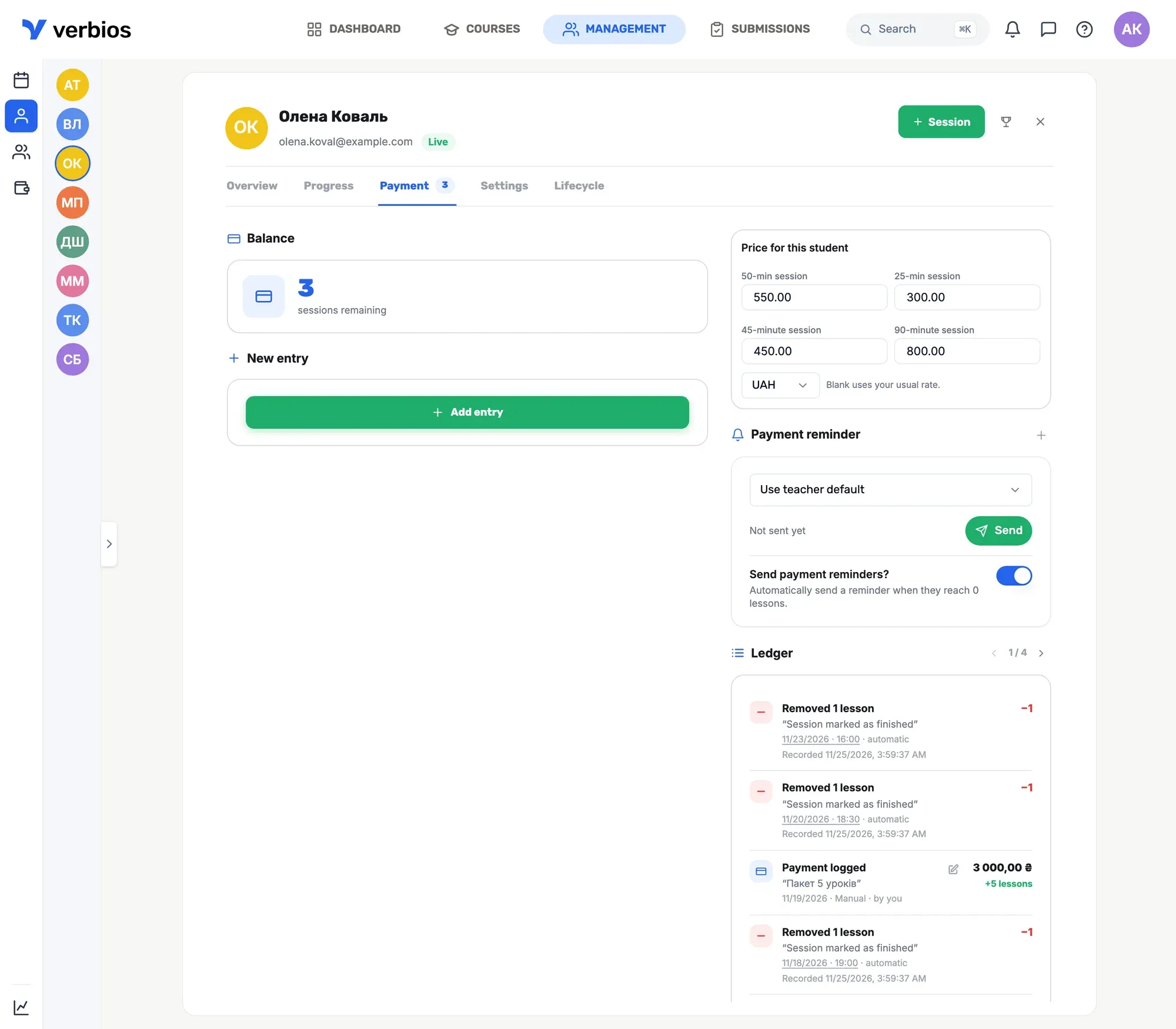
A common pattern is a single lesson at the regular rate and a package at a small discount. Packages also change behavior: a student who has already paid tends to show up. Whatever you choose, the student must always know how many paid lessons are left. In verbios each student who pays you directly has a Payment tab with a lesson balance and their own price per lesson length. See how tutors track student payments and lesson balances.
A cancellation policy that needs no arguments
Write it down before the first lesson and send it to every student (or parent). It should answer four questions:
- Deadline: how late can they cancel without paying? Either hours before the lesson or a set time the day before.
- Consequence: is a late cancellation charged in full, partly, or moved to a make-up lesson?
- Your cancellations: what do you do if you cancel late? Most tutors offer a free lesson or a refund of the credit.
- No-shows: treated as a late cancellation.
Choose a rule you are willing to apply to everyone, including your friendliest students. In verbios you can set the policy either as “hours before the lesson” or as “until a set time the day before”, for example 19:00 the evening before, counted in your time zone. A lesson at 10:00 on Wednesday can be canceled for free until Tuesday 19:00, whatever time it starts. Teachers can also separate a student’s late cancellation, a teacher’s late cancellation with compensation and a cancellation with no charge, so the balance stays correct.
Reminders, without being the person who chases money
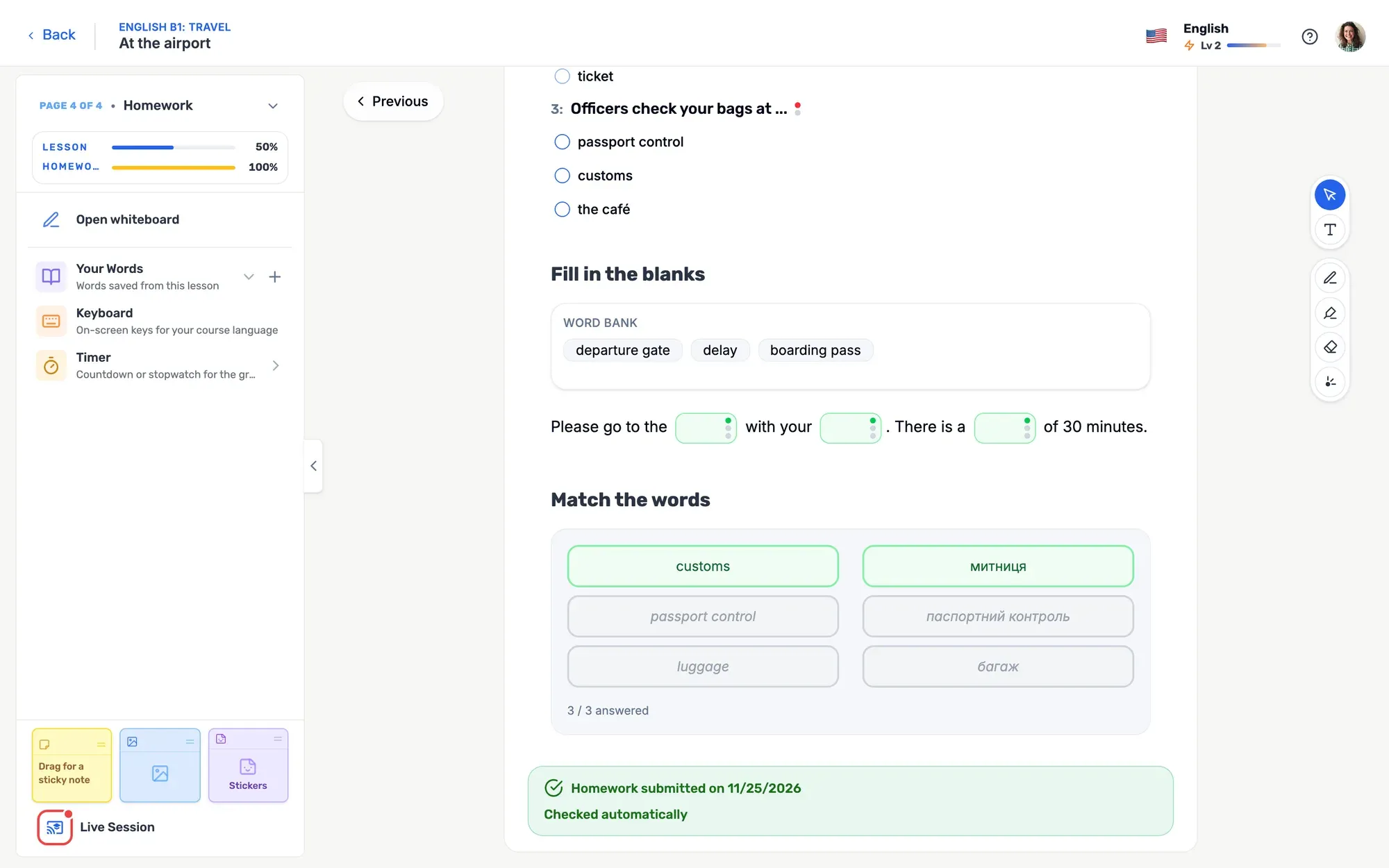
Students rarely avoid paying on purpose; they forget. Decide on a payment moment (“the package ends, a new one starts”) and automate reminders if you can. verbios sends payment reminders on your behalf with payment buttons, and you can switch them on or off per student. If a student has a parent linked, reminders go to the parent. Students you do not bill by the lesson can have payment tracking turned off, so they do not see a balance. Keep a short, neutral wording: “Your package ends after the next lesson. Here is the link for the next one.”
Also keep one place where each payment is written down, with date, amount and number of lessons. A spreadsheet is fine. Memory is not.
Scheduling across time zones
If you teach students abroad (relocated families, adults who work shifts), most mix-ups come from one thing: two people in different time zones each reading the time in their own way. Rules that help:
- Fix your schedule to one time zone (yours) and display every lesson in it.
- Let students book in their own time zone so they never need to convert. In verbios students see available slots in their own time zone, while the lesson is booked at the right moment for you.
- Set availability hours so students can only request times you are willing to teach, and protect rest days.
- Set up recurring weekly lessons and sync them with your calendar, so a regular slot does not need to be rebooked. See recurring lessons with Google Calendar and an online teaching schedule.
Be careful at clock changes (daylight saving) when students are in countries that switch on different dates: check the week around the change manually.
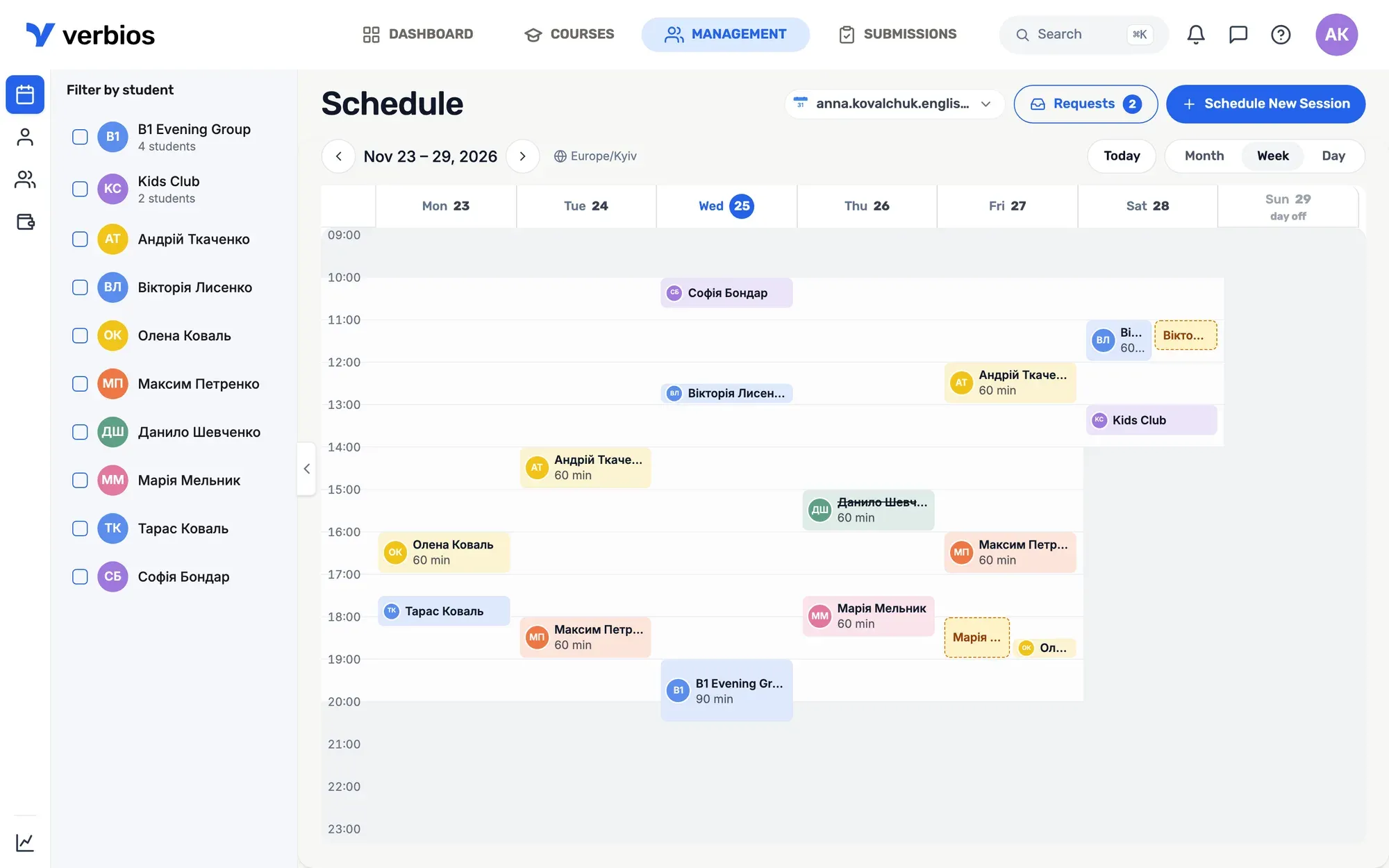 A week view with each student in their own color.
Not burning out
Overwork is the most common way tutoring businesses fail, usually through unpaid hours. Some practical limits:
- Choose a maximum number of teaching hours per week and stop selling slots when you reach it.
- Block one full day off and an end time in the evening.
- Reuse lessons instead of building each from scratch (see how to plan a lesson fast).
- Let homework be checked automatically where possible; see homework students actually do.
- Review your students every few months. If one lesson costs you more energy than it pays, raise the price or make space for someone else.
When you are ready to run this in one place (schedule, balances, reminders), see the verbios pricing page for which plan includes direct students and live lessons.
Frequently asked questions
Should tutors charge per lesson or sell packages?
Neither is always better. Pay-per-lesson is easy to start and low commitment, while packages give you predictable income and fewer last-minute drop-outs. Many tutors offer a single lesson at the normal rate and a package of several lessons that gets a small discount.
What should a cancellation policy say?
State a clear deadline (for example, a number of hours before the lesson, or a set time the evening before), what happens if it is missed (the lesson is charged or counted), and what you do in case of your own cancellation. Send it to every student before the first lesson.
How do I decide how much to charge?
Work backwards from the income you need per month, subtract the unpaid time (planning, admin, gaps), and divide by the lessons you realistically teach. Then compare with tutors who have a similar qualification and student type, and adjust for your results and demand.